Ingredients
Directions
- Prepare the Noodles:
- Cook the rice noodles according to package instructions. Drain and set aside.
- Toast the Cashews:
- In a large, dry skillet, toast the cashews over medium heat until they are golden brown and fragrant, about 5 minutes. Remove from the skillet and set aside.
- Sauté the Vegetables:
- In the same skillet, heat the vegetable oil over medium-high heat. Add the sliced mushrooms and onions. Stir fry for about 3 minutes until they begin to soften.
- Add Remaining Vegetables:
- Add the red bell pepper, zucchini, and carrots to the skillet. Stir fry for another 4-5 minutes until the vegetables are tender-crisp.
- Add Aromatics:
- Stir in the minced garlic and ginger. Cook for about 1 minute until fragrant.
- Prepare the Sauce:
- In a small bowl, whisk together the soy sauce, hoisin sauce, rice vinegar, and sesame oil.
- Combine Everything:
- Add the cooked rice noodles and toasted cashews to the skillet with the vegetables. Pour the sauce over everything and toss to combine. Cook for an additional 2-3 minutes until everything is heated through.
- Serve:
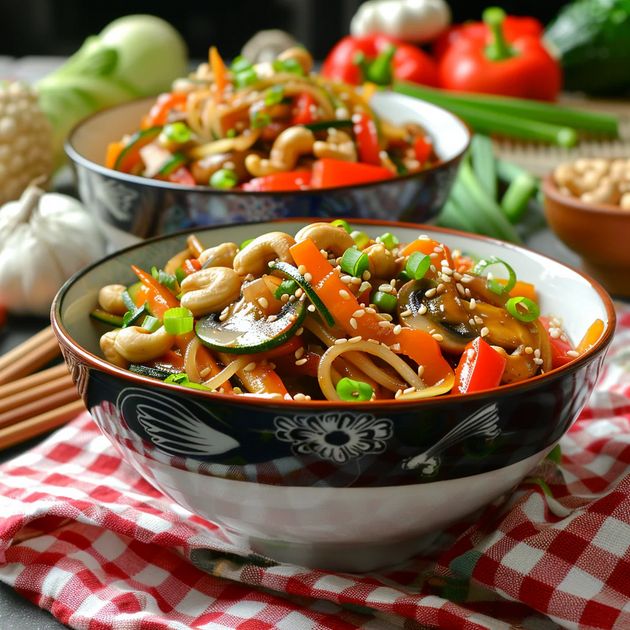
- Divide the stir fry among four plates. Garnish with chopped green onions and sesame seeds. Serve immediately.
- Calories: 400, Protein: 10g, Carbohydrates: 50g, Sugars: 10g, Total Fat: 18g, Saturated Fat: 3g, Sodium: 900mg, Fiber: 5g
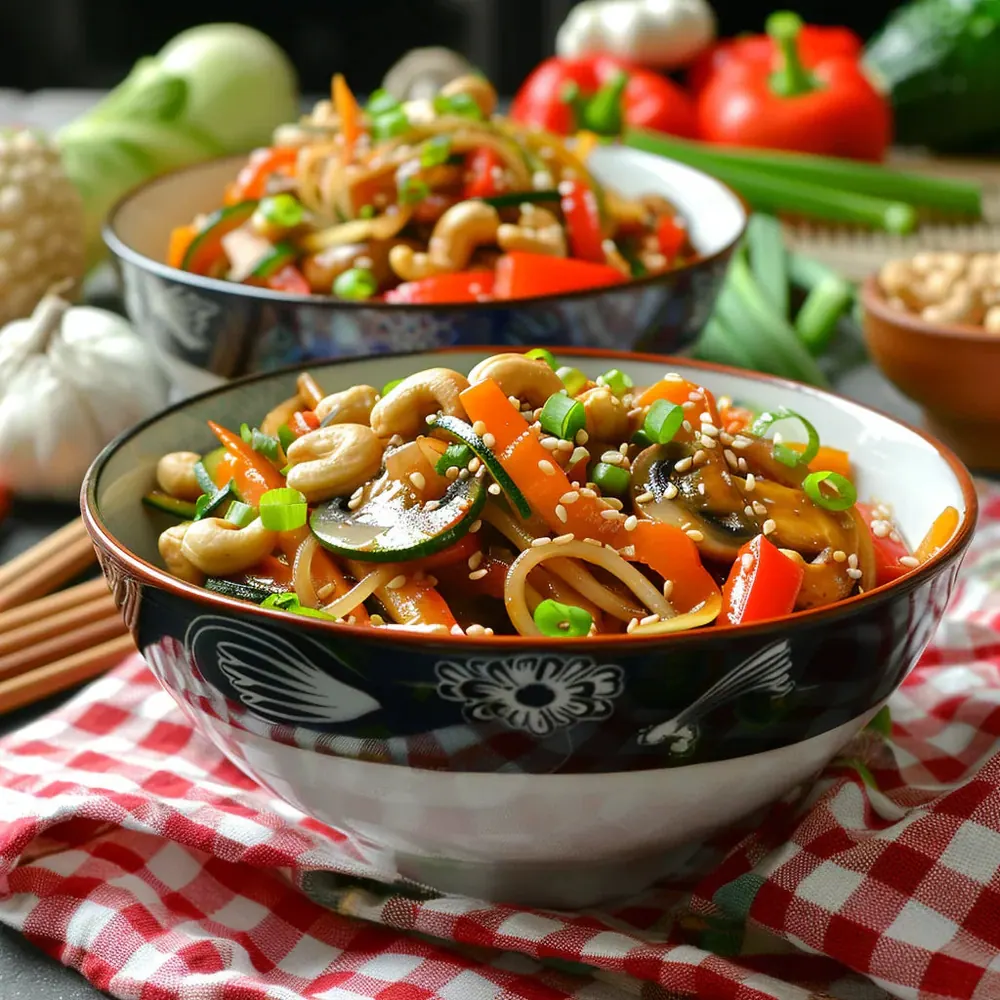 There's something wonderfully satisfying about preparing a quick and delicious stir fry, especially when it's packed with vibrant vegetables and crunchy cashews. Stir fry dishes are not only versatile but also a great way to use up leftover veggies, making them an economical choice for busy weeknights. The combination of tender-crisp vegetables, soft rice noodles, and toasted cashews creates a perfect balance of textures. And with the right sauces and spices, this dish brings all the flavors of a takeout meal, without leaving your kitchen.
Did You Know?
Stir frying is a traditional Chinese cooking technique that dates back over 2,000 years. It's a quick method of cooking where ingredients are fried in a small amount of very hot oil while being stirred in a wok. This method not only preserves the nutrients in the vegetables but also enhances their flavors and textures.
Nutritional Information (Per Serving):
Calories: 400, Protein: 10g, Carbohydrates: 50g, Sugars: 10g, Total Fat: 18g, Saturated Fat: 3g, Sodium: 900mg, Fiber: 5g
Kitchen Tips, Great Ideas, How to Save Money
- Buying in Bulk: Purchase cashews and rice noodles in bulk to save money. They have a long shelf life and can be used in various recipes.
- Vegetable Choices: Use any vegetables you have on hand. Broccoli, snow peas, or snap peas are excellent additions or substitutes.
- Oil Alternatives: Substitute vegetable oil with sesame oil for a richer flavor. Just be cautious as it has a lower smoke point.
- Spice It Up: Add a pinch of red pepper flakes or a dash of hot sauce for an extra kick.
- Fresh Herbs: Add fresh herbs like cilantro or Thai basil just before serving for an extra burst of flavor.
- Sauce Variations: Experiment with sauces like teriyaki or sweet and sour to change up the flavor profile.
- Meal Prep: Chop all vegetables ahead of time and store them in the refrigerator. This saves time when you're ready to cook.
- Leftovers: Store leftovers in an airtight container in the refrigerator for up to 3 days. Reheat gently on the stove or in the microwave.
- Protein Boost: Add tofu or tempeh for additional protein if desired. Simply cook them in the skillet before adding the vegetables.
- Eco-Friendly Options: Use reusable silicone bags for storing prepped vegetables and leftovers instead of disposable plastic bags.
Let's Learn About Cashews
Cashews are a unique nut because they grow outside of a fruit called the cashew apple, which is native to tropical climates like Brazil, India, and parts of Africa. The cashew nut itself is harvested from the bottom of the cashew apple, encased in a shell that contains toxic oils, making the harvesting process labor-intensive. Workers must carefully remove the outer shell to reveal the edible cashew inside, often by roasting or steaming them to neutralize the toxins.
Raw vs. Roasted Cashews:
You’ll often see cashews labeled as either raw or roasted. Although “raw” cashews are actually steamed during processing to remove their toxic shell, they retain more of their natural flavor and nutrients. Raw cashews are commonly used in vegan cooking due to their creamy texture when soaked, making them ideal for dairy-free recipes like vegan cheesecakes and sauces. Roasted cashews, on the other hand, are cooked with heat and sometimes seasoned, giving them a richer, more intense flavor and crunch, perfect for snacking or adding to stir-fries.
Pesticide Use and Organic Options:
Cashews are not typically heavily sprayed with pesticides compared to other crops. However, it’s always a good idea to look for organic cashews when possible, especially if you're concerned about chemical residues. Organic farming practices ensure that the nuts are grown without synthetic chemicals, offering a more sustainable option for the environment and a cleaner product for consumption.
In summary, cashews are a versatile and nutritious nut, harvested with care and available in both raw and roasted forms, each with its own unique uses. Whether you're enjoying them in a savory dish or a sweet treat, cashews are a delicious and healthy addition to any diet.
Shop Grandma's favourites
Eight pieces Heidi & Nancy love — to wear in the kitchen or gift to someone who loves to cook. Free shipping over $75 USD.

Embroidered Bandana Caps
From $19.00 USD Sale

Sweet Embroidered Headbands
From $12.00 USD Sale

Soft Retro Headbands
From $15.95 USD Sale

Tie Dye Bandana Hair Wrap
From $19.00 USD Sale

The Classic Apron
From $29.95 USD Sale

Set of 12 - Cotton Flower Handkerchiefs
$22.00 USD

Grandmother's Vintage Style Coin Purse
From $12.95 USD Sale

Grandmother's Mini Coin Purse
From $9.00 USD Sale