Main Dishes · October 6, 2025
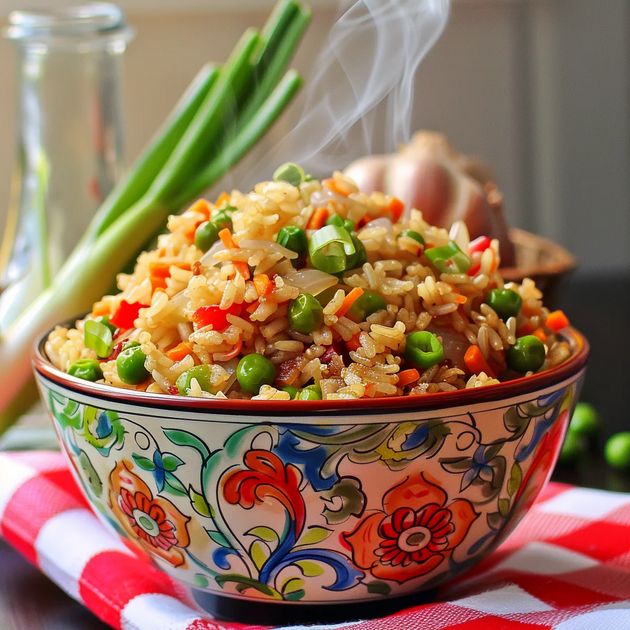
Super Easy Vegetable Fried Rice – A Colorful and Delicious Meal
Ingredients
Directions
- Cook Eggs:
- Heat 1 tablespoon of sesame oil in a large skillet over medium-high heat. Add the eggs and scramble until fully cooked. Remove and set aside.
- Stir-Fry Vegetables:
- In the same skillet, heat the remaining sesame oil. Add onion, peas, carrots, and bell pepper. Stir-fry for 5-7 minutes, until vegetables are tender.
- Add Aromatics:
- Add garlic and ginger, and cook for another 1-2 minutes.
- Combine Rice and Sauce:
- Add the cooked rice, soy sauce, and hoisin sauce (if using). Stir to combine and cook for about 3-4 minutes, until the rice is heated through.
- Add Eggs and Green Onions:
- Return the scrambled eggs to the skillet, add green onions, and stir until well mixed.
- Season and Serve:
- Season with salt and pepper to taste, and serve hot.
- Calories: 300, Protein: 10g, Carbohydrates: 45g, Sugars: 4g, Total Fat: 10g, Saturated Fat: 2g, Sodium: 550mg, Fiber: 5g
Vegetable Fried Rice Super Easy and Delicious Some meals are so simple yet so satisfying, and vegetable fried rice is one of those dishes. The beauty of this meal lies in its versatility—you can make it with just about any vegetables you have on hand, and the rice can be cooked ahead of time, which makes the whole...
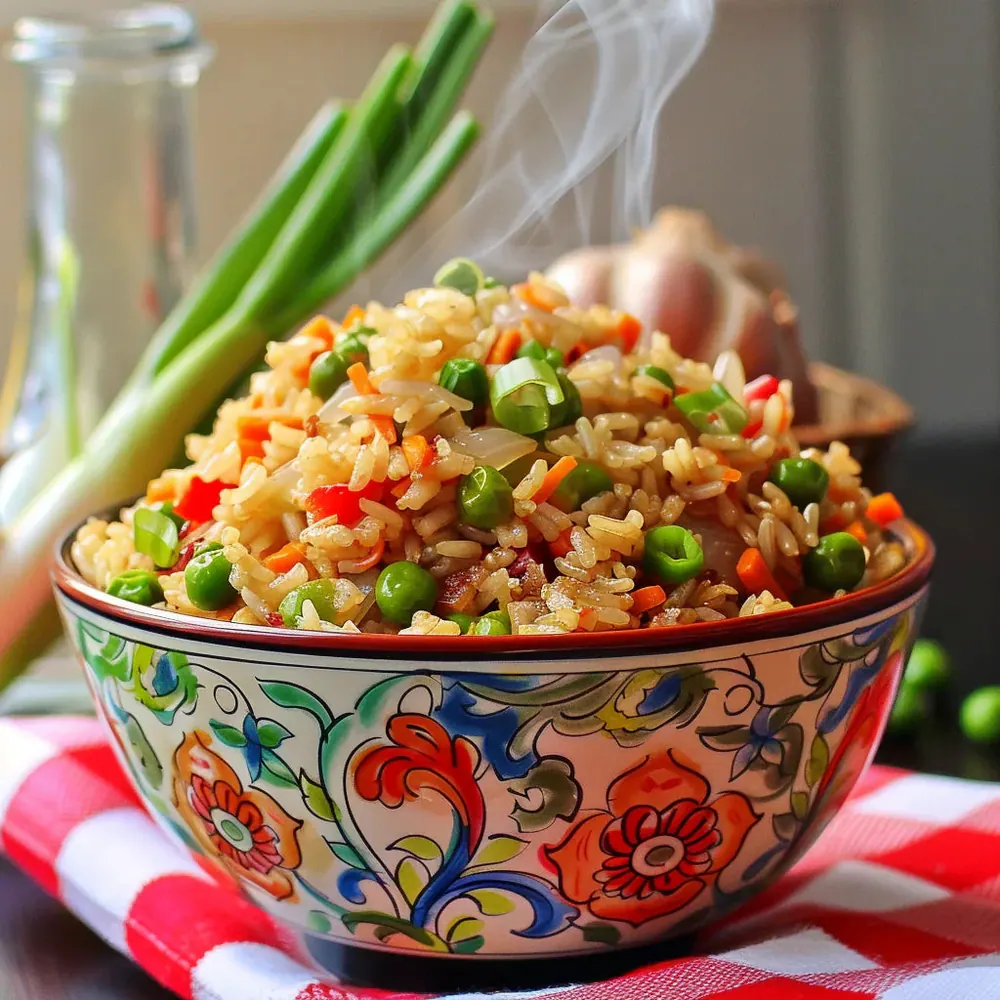 Vegetable Fried Rice Super Easy and Delicious
Some meals are so simple yet so satisfying, and vegetable fried rice is one of those dishes. The beauty of this meal lies in its versatility—you can make it with just about any vegetables you have on hand, and the rice can be cooked ahead of time, which makes the whole process even faster. I love making this dish after a busy day because it comes together quickly, and the combination of colorful veggies always makes it look so appetizing. Whether I’m using leftover rice or cooking a fresh batch, it’s the perfect recipe to whip up when I want something tasty but don’t have a lot of time. Plus, it’s a great way to pack in extra veggies without feeling like you're eating a salad!
Did You Know?
Fried rice has a long history that dates back to the Sui Dynasty in China (589–618 AD). Originally, it was a way to utilize leftover rice and ingredients, turning them into a new and flavorful meal. This culinary practice has spread worldwide, leading to various adaptations based on regional tastes and available ingredients. Vegetable fried rice, in particular, is celebrated for its simplicity, nutritional value, and versatility. It can be easily customized with different vegetables, proteins, and seasonings. The use of chilled rice is a traditional technique to prevent the grains from sticking together, resulting in a perfectly textured dish. Today, fried rice is a staple in many households and a popular menu item in Chinese restaurants globally.
Nutritional Information (Per Serving):
Calories: 300, Protein: 10g, Carbohydrates: 45g, Sugars: 4g, Total Fat: 10g, Saturated Fat: 2g, Sodium: 550mg, Fiber: 5g
Kitchen Tips, Great Ideas, How to Save Money
-
Use Leftover Rice: Chilled leftover rice works best for fried rice. It prevents the rice from becoming mushy, providing a better texture. Save any extra rice from previous meals for this purpose.
-
Versatile Veggies: You can use any vegetables you have on hand. Zucchini, snap peas, and mushrooms are excellent additions. This flexibility helps reduce waste and makes use of what you already have.
-
Cook in Batches: If you’re making a large amount, cook the ingredients in batches to avoid overcrowding the pan. This ensures even cooking and prevents the vegetables from steaming.
-
Budget-Friendly Ingredients: Frozen vegetables are often cheaper than fresh and just as nutritious. Stock up on frozen peas, carrots, and bell peppers when they’re on sale.
-
Bulk Buying: Buy rice in bulk to save money. Brown rice is a healthy and economical staple that can be used in many dishes.
-
Flavor Boosters: For extra flavor, consider adding a splash of sesame oil at the end of cooking or a sprinkle of sesame seeds as a garnish.
-
Protein Additions: Add extra protein such as tofu, chicken, or shrimp to make the dish more filling. This can help turn a side dish into a main meal.
-
Healthier Options: Use low-sodium soy sauce to reduce the sodium content. You can also substitute tamari or coconut aminos for a gluten-free option.
-
Prepping Ginger: Freeze fresh ginger. It’s easier to grate and lasts longer, ensuring you always have it on hand.
-
Make Extra for Meals: Double the recipe and save leftovers for lunches or quick dinners. Fried rice reheats well and is perfect for meal prepping.
Let's Learn About Different Types of Rice
Rice is a staple food for over half of the world's population, and its versatility makes it a favorite in various cuisines. There are many different types of rice, each offering a unique texture, flavor, and nutritional profile. Understanding these varieties can help you make the best choice depending on the dish you're preparing.
White Rice:
White rice is the most commonly used type of rice, particularly in Asian and Latin cuisines. It has had its bran and germ removed, giving it a lighter texture and quicker cooking time. While it’s less nutritious than its brown counterpart, it remains a versatile base for many dishes, including fried rice, pilafs, and sushi.
Brown Rice:
Brown rice retains the bran and germ, which gives it a chewy texture and higher fiber content. It's packed with nutrients, including magnesium, phosphorus, and B vitamins. Brown rice takes longer to cook but provides a heartier, more filling base for dishes like stir-fries, grain bowls, and casseroles.
Basmati Rice:
Basmati rice is known for its fragrant aroma and long, slender grains. Commonly used in Indian and Middle Eastern cuisines, it’s perfect for dishes like biryani and pilaf. Basmati rice comes in both white and brown varieties, and when cooked, the grains stay separate, giving it a fluffy texture.
Jasmine Rice:
Jasmine rice, primarily grown in Southeast Asia, is a fragrant, slightly sticky variety. Its floral aroma makes it ideal for pairing with Thai and Vietnamese dishes. While it shares similarities with basmati, jasmine rice tends to be softer and stickier, giving it a more tender bite.
Wild Rice:
Wild rice is technically not rice but a type of grass seed. It has a distinct nutty flavor and chewy texture, making it a great addition to salads, soups, and casseroles. Wild rice is higher in protein and fiber than traditional white rice, making it a nutritious option for those looking to incorporate more whole grains into their diet.
Black Rice (Forbidden Rice):
Black rice is a highly nutritious variety rich in antioxidants, particularly anthocyanins, which give it its dark color. Once reserved for Chinese royalty, black rice has become more popular due to its unique appearance and high nutritional content. It's often used in both savory dishes and desserts, thanks to its slightly sweet flavor and chewy texture.
Arborio Rice:
Arborio rice is the go-to choice for creamy dishes like risotto. Its short, plump grains release starch as they cook, creating a creamy texture perfect for rich, comforting dishes. Arborio rice is also used in some dessert recipes like rice pudding.
Shop Grandma's favourites
Eight pieces Heidi & Nancy love — to wear in the kitchen or gift to someone who loves to cook. Free shipping over $75 USD.

Embroidered Bandana Caps
From $19.00 USD Sale

Sweet Embroidered Headbands
From $12.00 USD Sale

Soft Retro Headbands
From $15.95 USD Sale

Tie Dye Bandana Hair Wrap
From $19.00 USD Sale

The Classic Apron
From $29.95 USD Sale

Set of 12 - Cotton Flower Handkerchiefs
$22.00 USD

Grandmother's Vintage Style Coin Purse
From $12.95 USD Sale

Grandmother's Mini Coin Purse
From $9.00 USD Sale